Uniskai by Profisea Labs
I was Uniskai's sole product designer from seed round to Series A — four years turning a cloud-management idea into an AI-based multi-cloud FinOps platform that now saves its customers $130M a year. This case is how a designer earns trust in a deeply technical domain.
About the project
THE CHALLENGE
Create a UI-based application to visualize, manage and optimize multi-cloud infrastructure. When I joined as the sole designer, the team was strong on cloud expertise but the product had no design process at all — and the deck was stacked against design:
- Resistance of technical engineers to adopting a UI-based solution
- Integrating different cloud ecosystems in a context-aware manner
- No clear understanding of who we were building for
- My own lack of domain expertise at the start
RESEARCH & SYNTHESIS
I attacked the last two problems with the same instrument: user research with 50+ FinOps and DevOps teams. The interviews located our real audience — FinOps and DevOps managers, CTOs, dev team leads — and closed my own domain gap faster than any course could.
We synthesized their pains: no picture of the entire infrastructure, unknown sources of cloud spend, no view of waste, no insights on potential savings, no way to bring executive reports to upper management. These pains became the product's structure — each one turned into a core instrument of the platform.
FROM PAINS TO PRODUCT
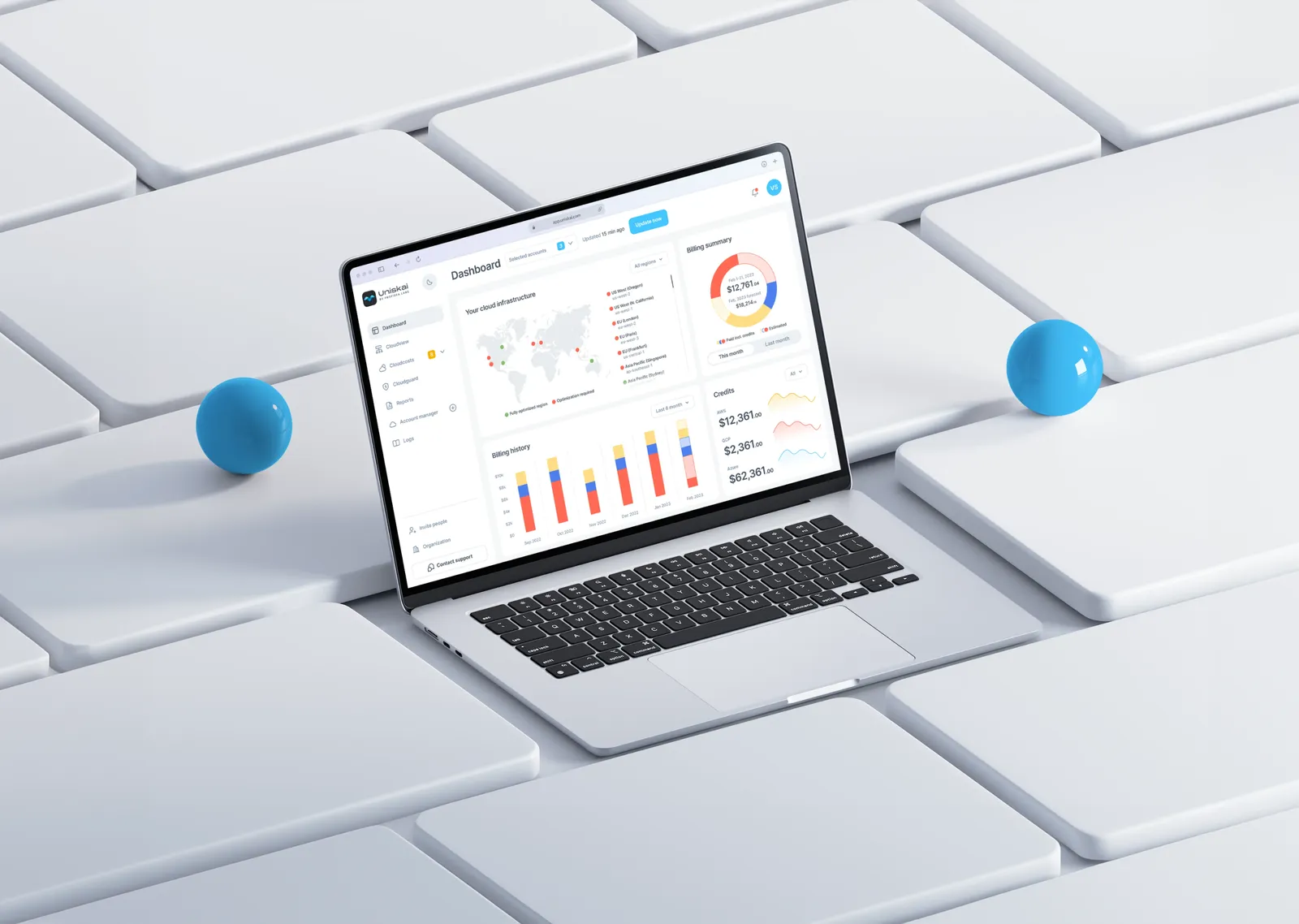
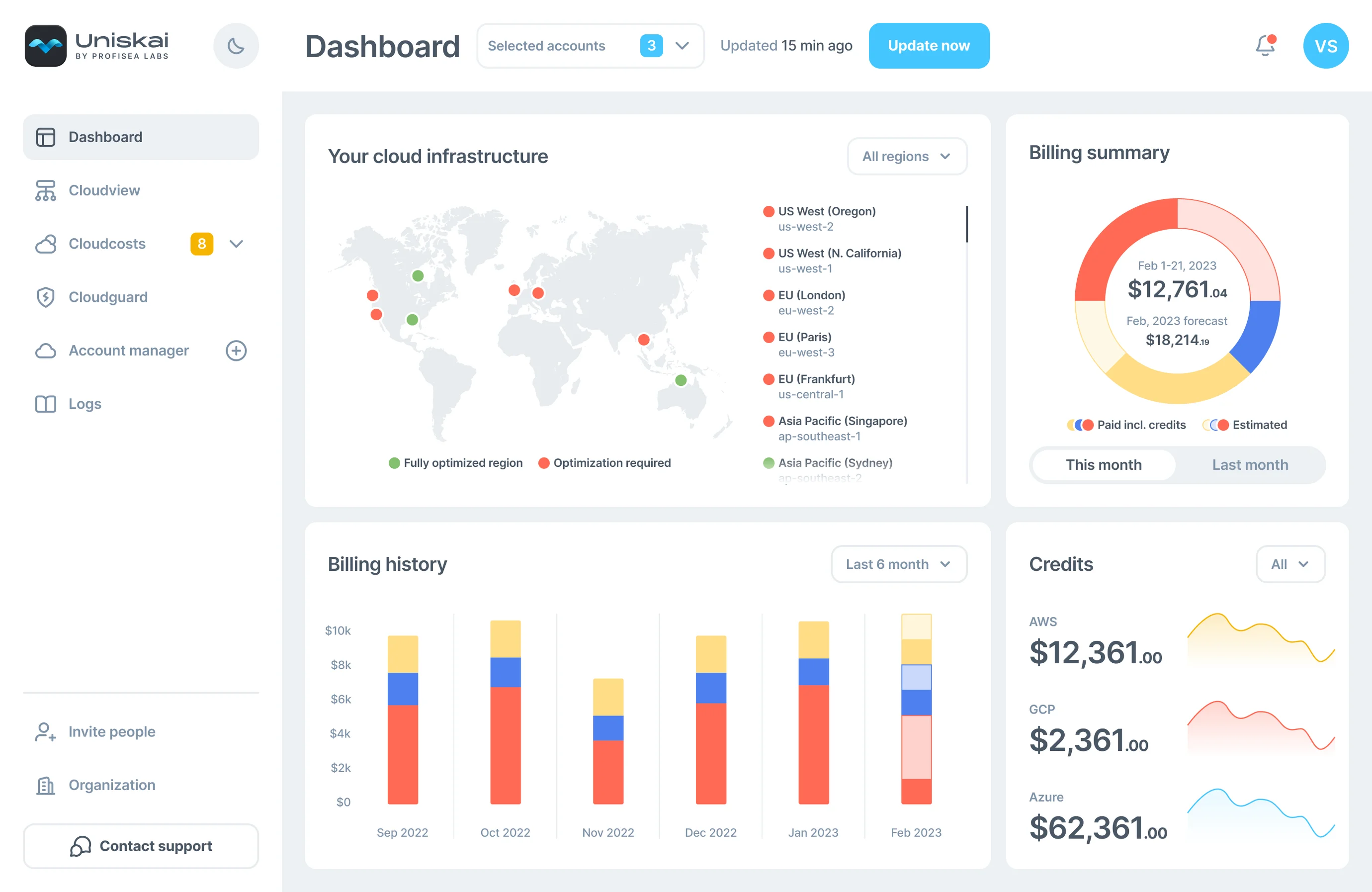
The first answer was the Dashboard: the entire infrastructure and its cost on one screen, with an ML-based forecast — the picture nobody on the customer side had ever seen in one place.
CLOUD VISIBILITY
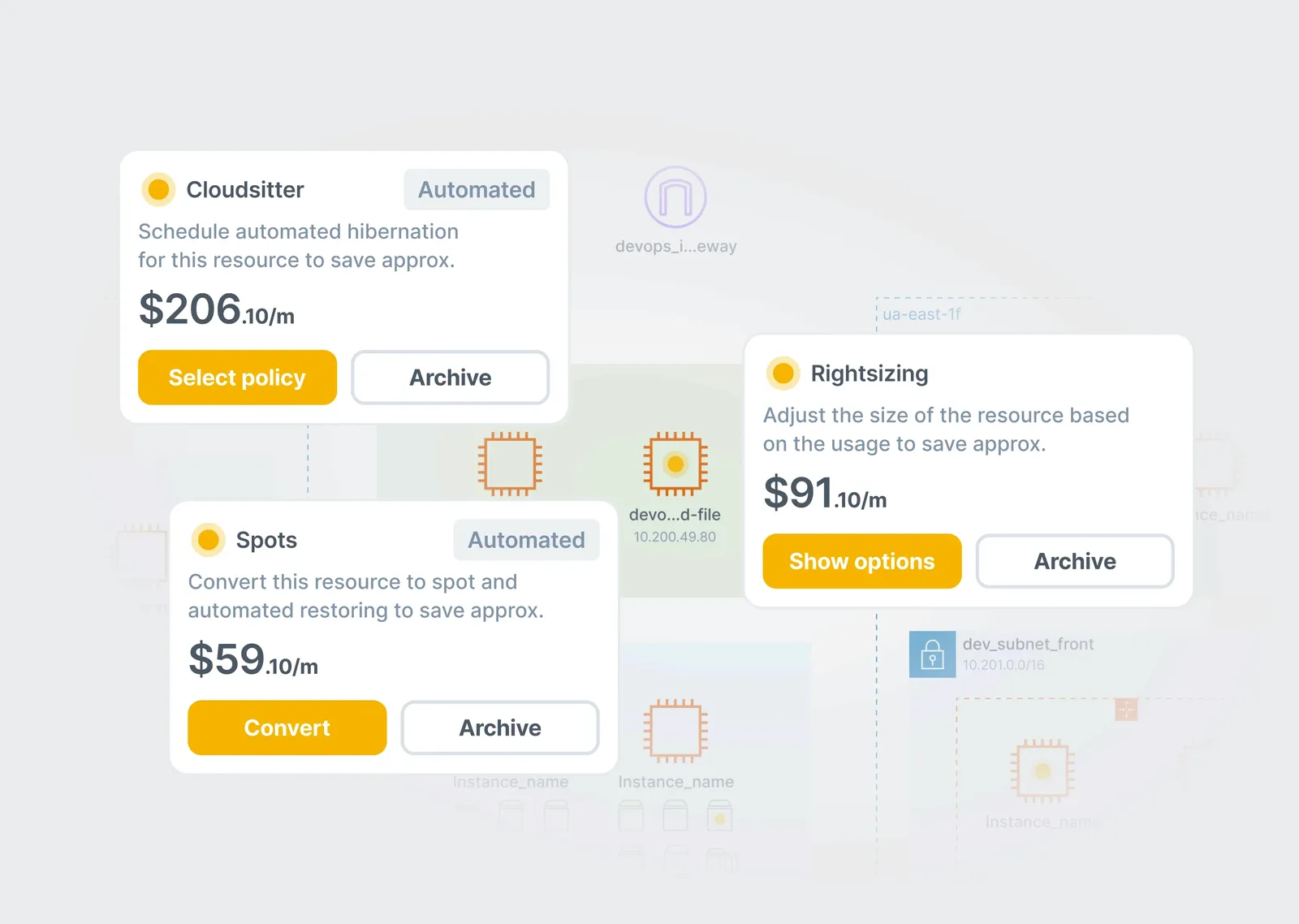
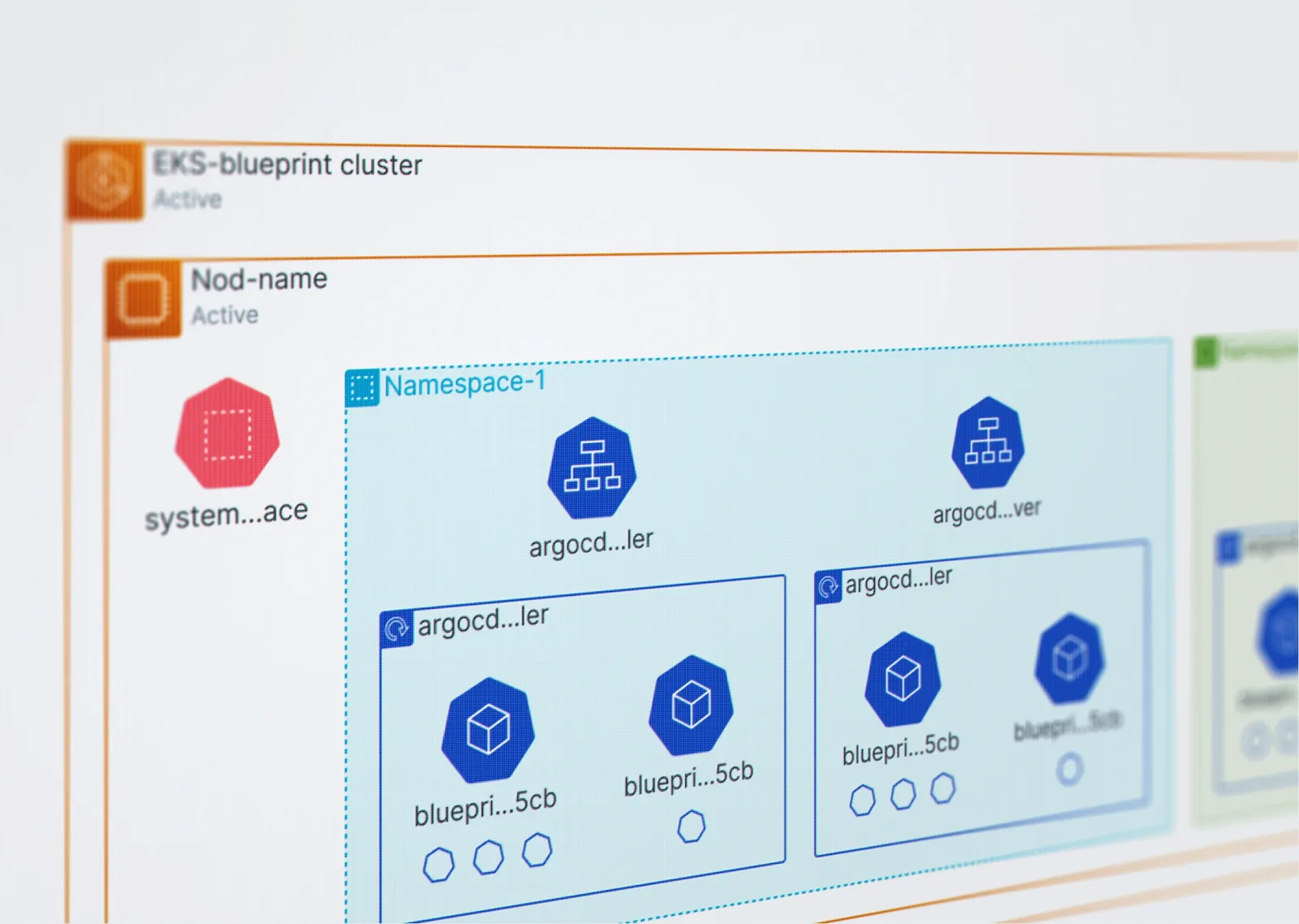
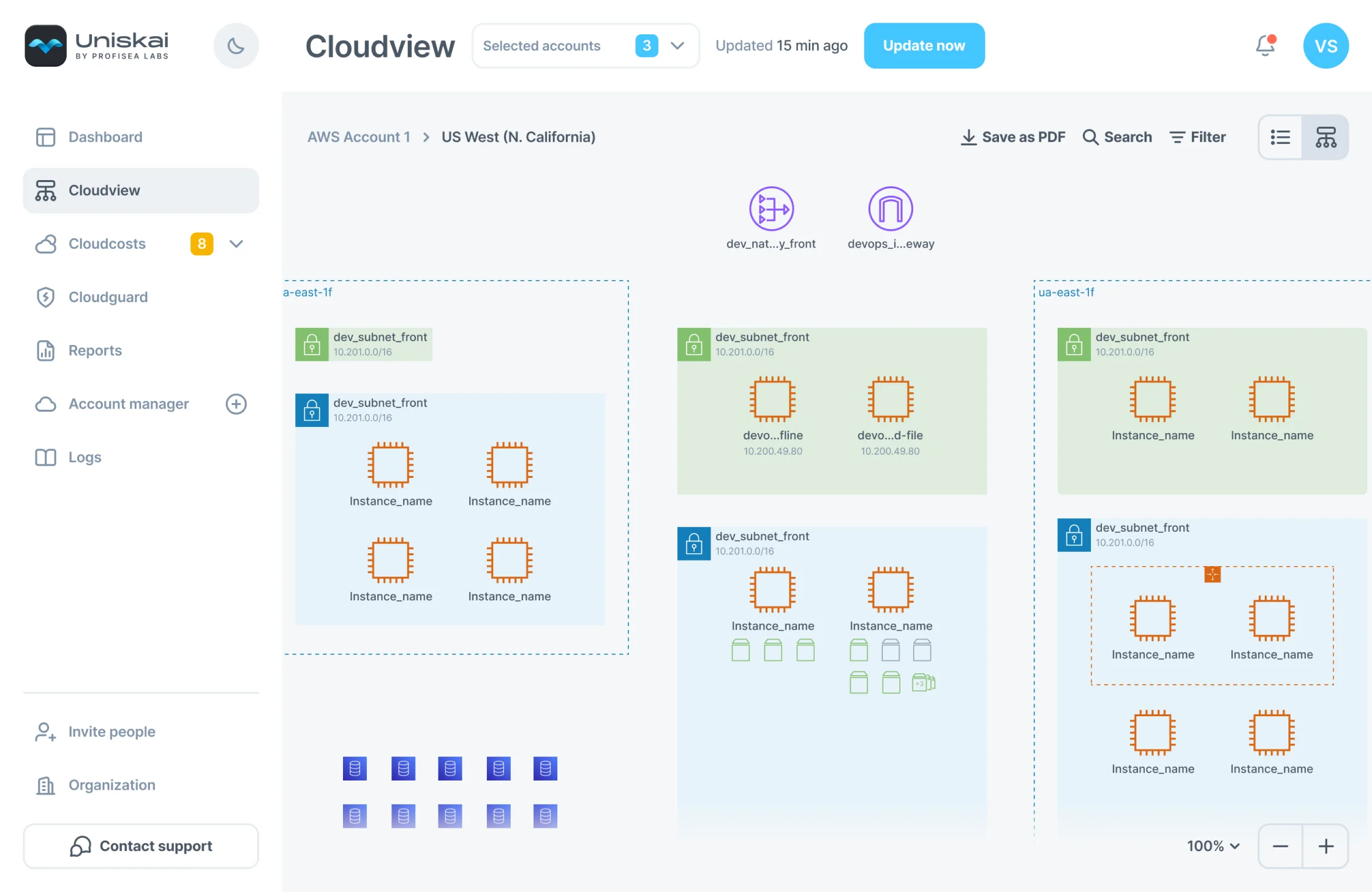
To make infrastructure tangible we built Cloudview — a universal hierarchical view where accounts, regions, VPCs and assets behave like a file manager: filter, search, drill down (Kubernetes clusters unfold to namespaces, pods and containers). The architectural diagram view visualizes all assets and the connections between them, with optimization insights shown right on the diagram.
This was also the answer to the engineers' skepticism about UI: Cloudview speaks their mental model — hierarchy, precision, drill-down — instead of hiding the cloud behind simplified pictures.
CLOUD SAVINGS
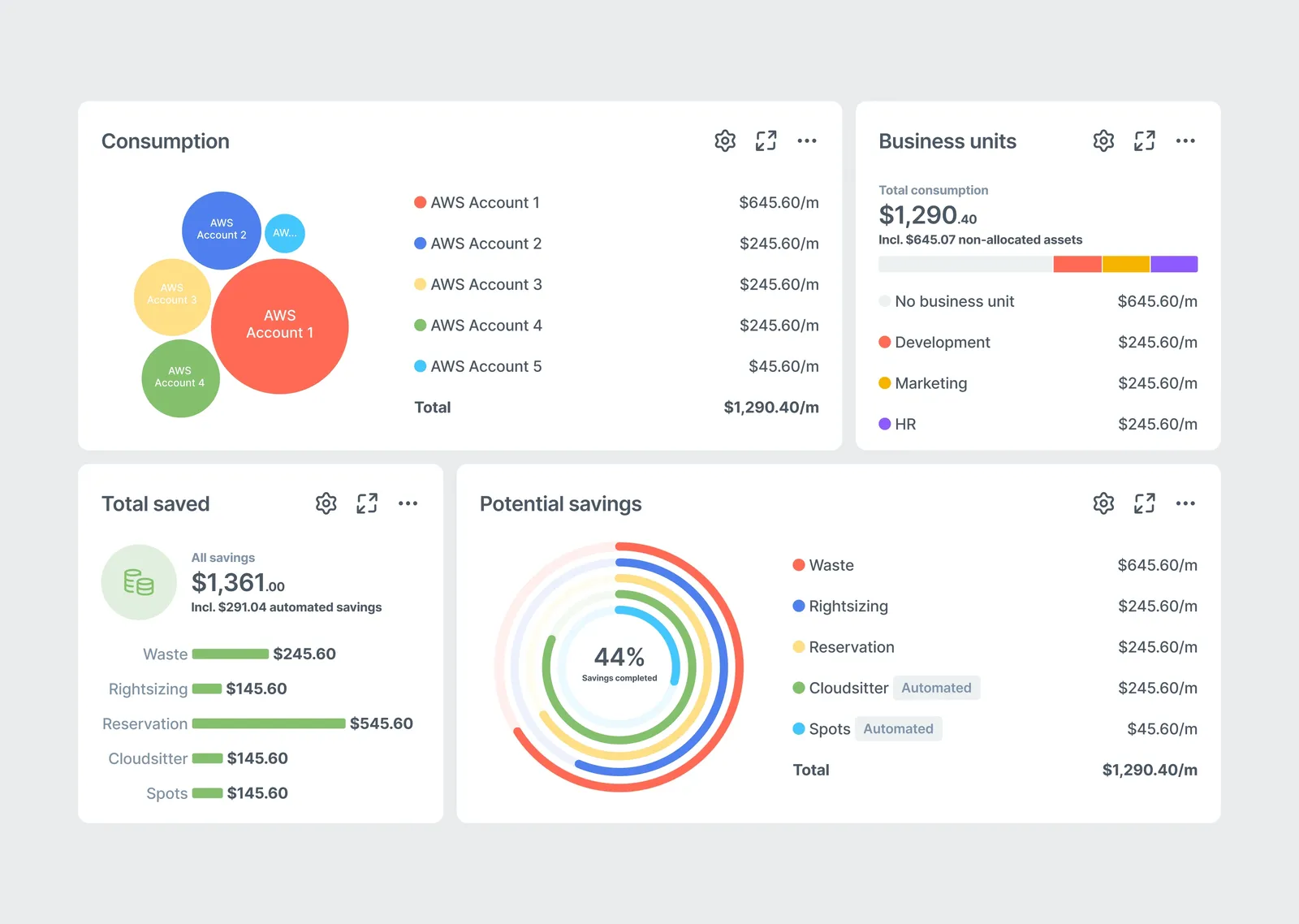
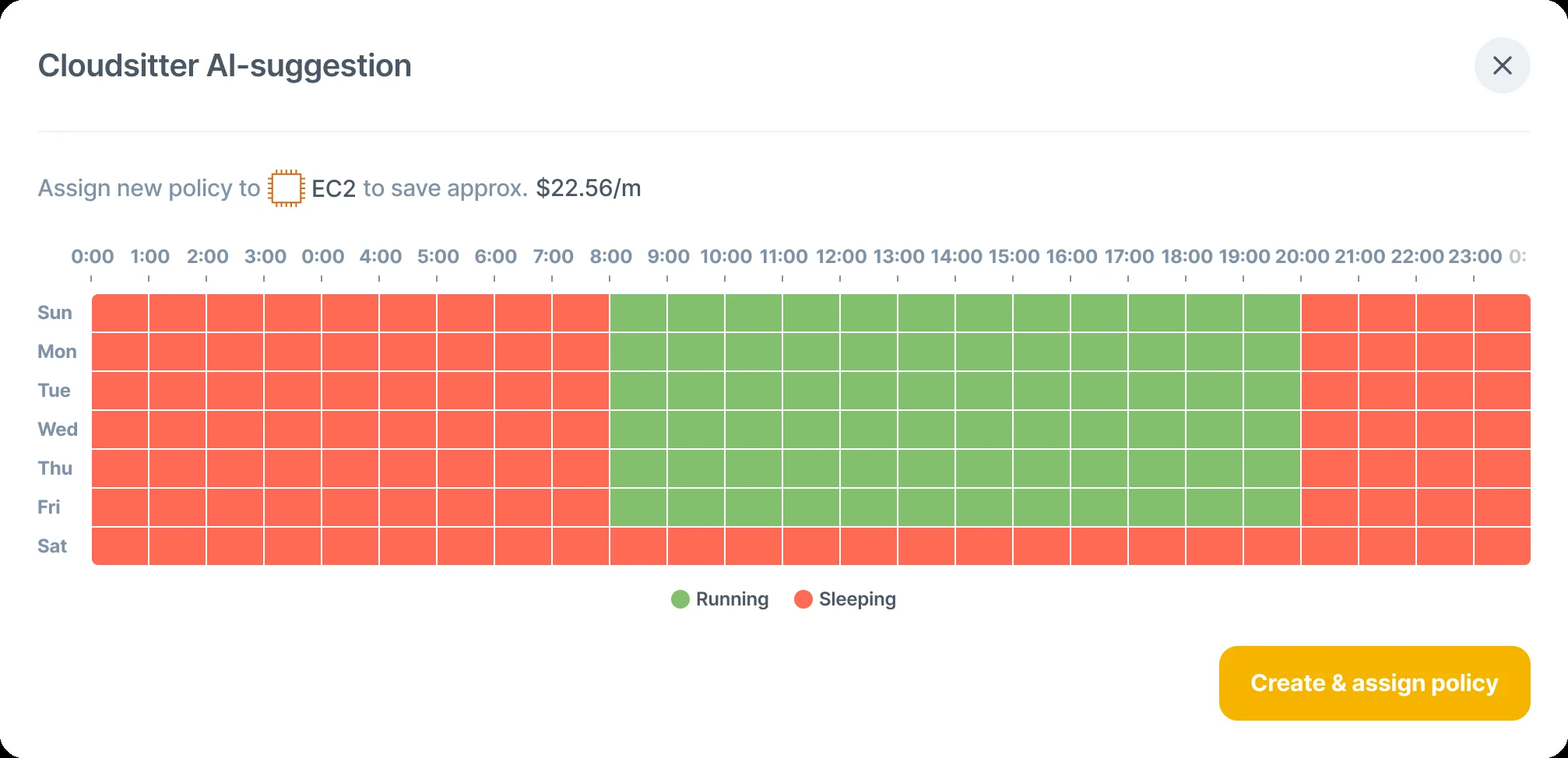
The FinOps side combines five instruments — Waste, Rightsizing (patented by Profisea Labs), Reservation, Spots and Cloudsitter. Machine-learning algorithms identify idle resources and hibernate them on AI-suggested schedules, so users stop paying for downtime.
EXECUTIVE REPORTS
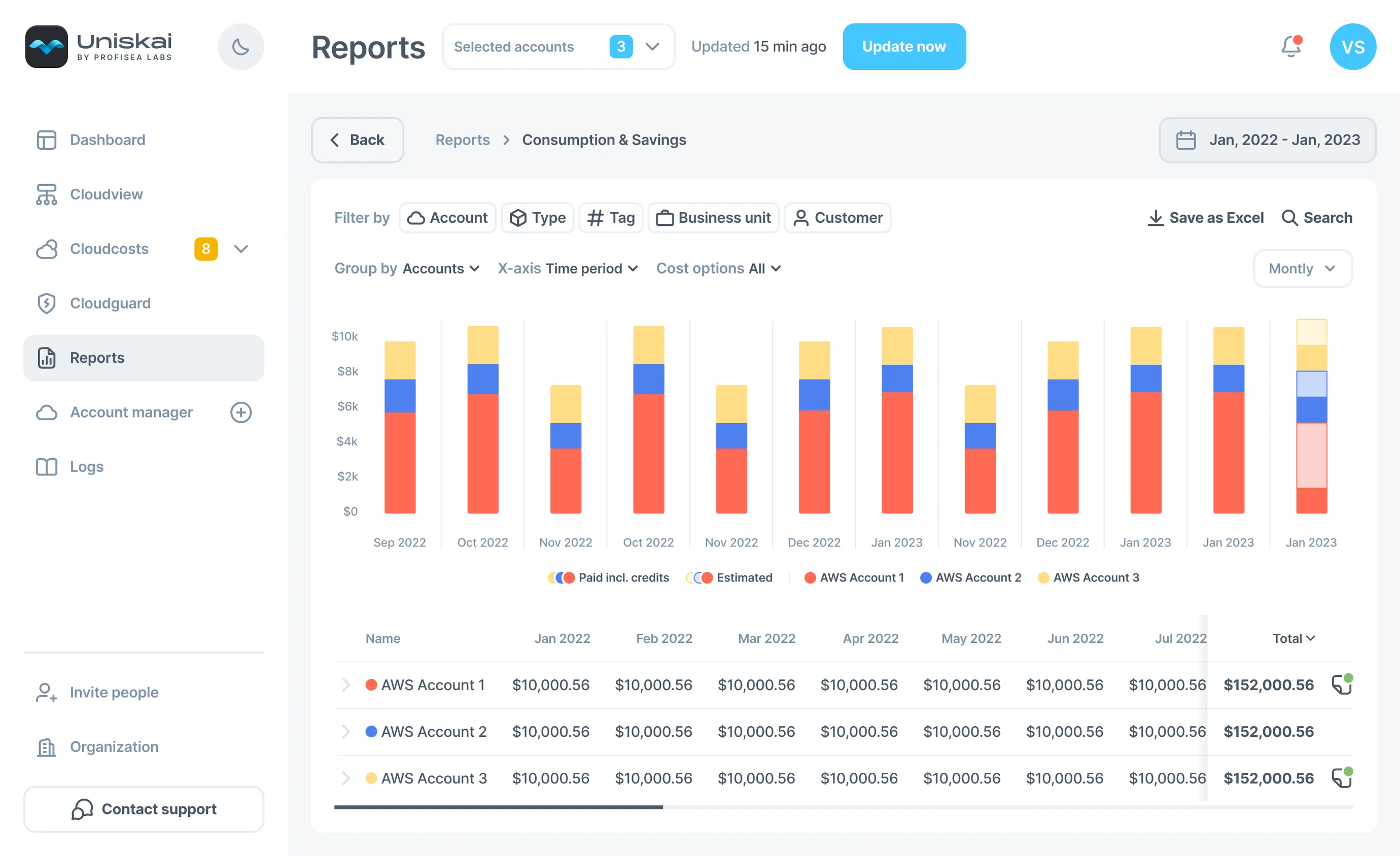
Reports turned billing into a real-time management tool: widgets for consumption, business units, total savers and potential savings, expandable down to accounts, regions and VPCs — with ML-based budget forecasting including credits and savings.
WHAT IT LED TO
The platform reached 85% activation, with customers processing $150M+ in cloud consumption and cutting infrastructure costs by up to 75%. The company went from seed to Series A on it.
For me it was four years inside cloud, DevOps and FinOps — learning to design for engineers by speaking their language. That domain, and that way of earning technical trust, is what I took into OpenVPN and AI-native delivery.