Insurance, as an experience
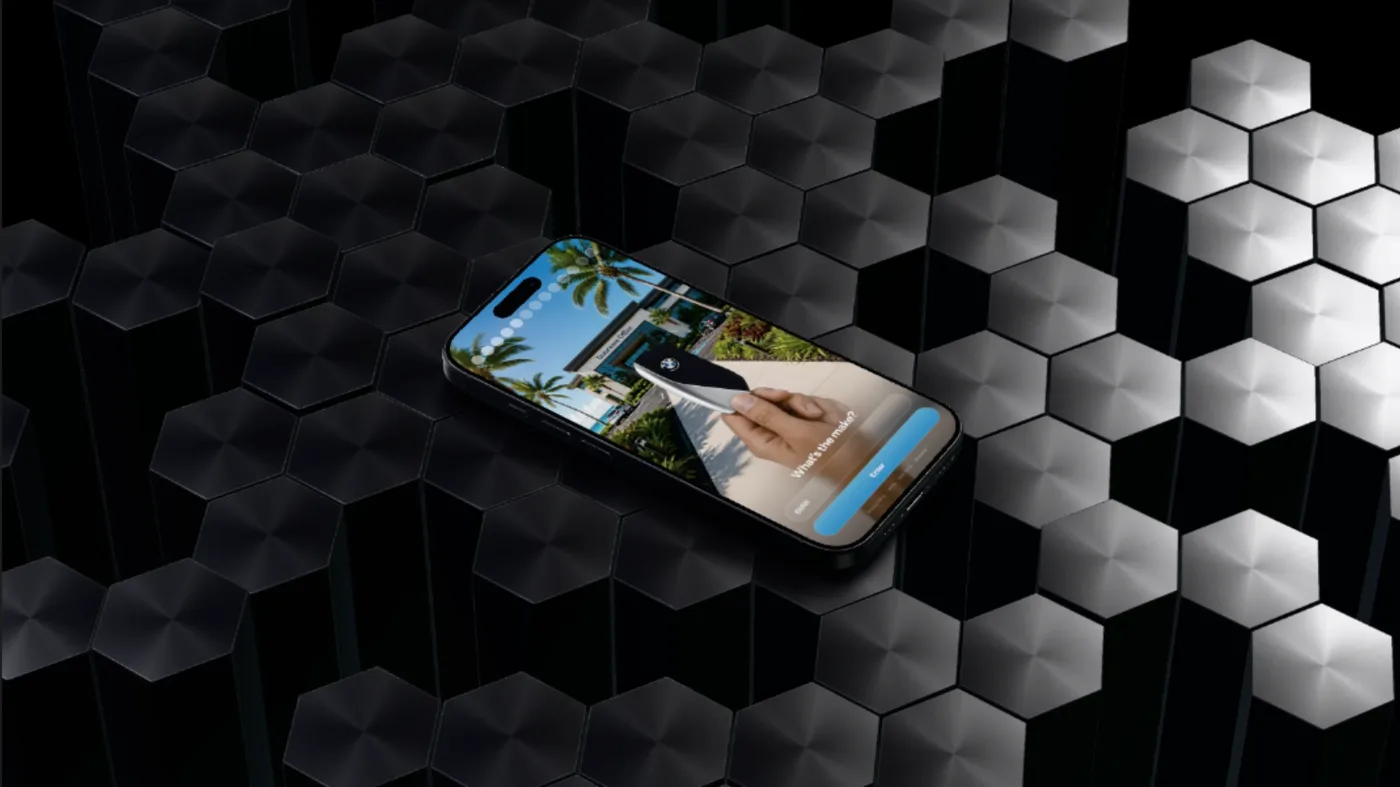
Every auto-insurance quote form on the internet is the same grey questionnaire. I built the opposite: you walk up to an office on a sunlit afternoon, and the world answers back — your region, your family, the key to your own car in your own hand. A freelance build: concept, design, code and all 795 assets by one person, in two weeks.
About the project
THE BET
Lead-gen forms convert badly for an obvious reason: twenty-nine questions about your car, your house, your driving record and your family, laid out as a grey wall of inputs. The industry's answer is to shorten the form. I wanted to test the opposite bet — keep every question, and make answering them feel like walking somewhere.
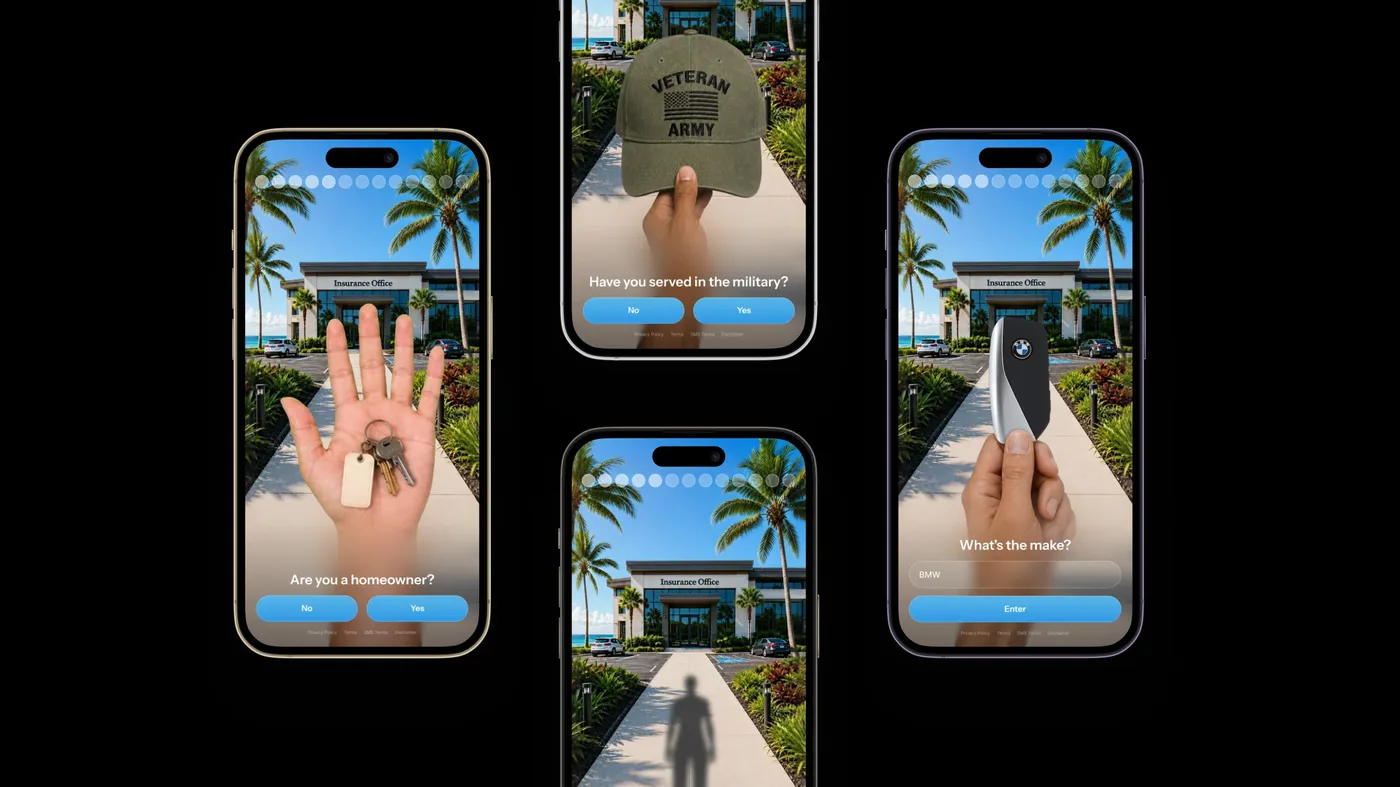
So the form became a place. You arrive at an insurance office on a warm afternoon, and each answer changes what you see: the neighbourhood, the sky, the shadow on the pavement ahead of you, what you're holding.
LIVE, ON THE REAL THING
This is the shipped product at rateidentity.com, driven the way a real visitor drives it — through the vendor's own compliant form. Past the gate, the ZIP resolves the region, and every answer moves the world behind the glass: gender, birth date, marriage, the skin-tone screen that is mine rather than theirs, address, homeowner, military service, accidents. Badges record each answer as you pass it.
SEVEN REGIONS, SIX SKIES
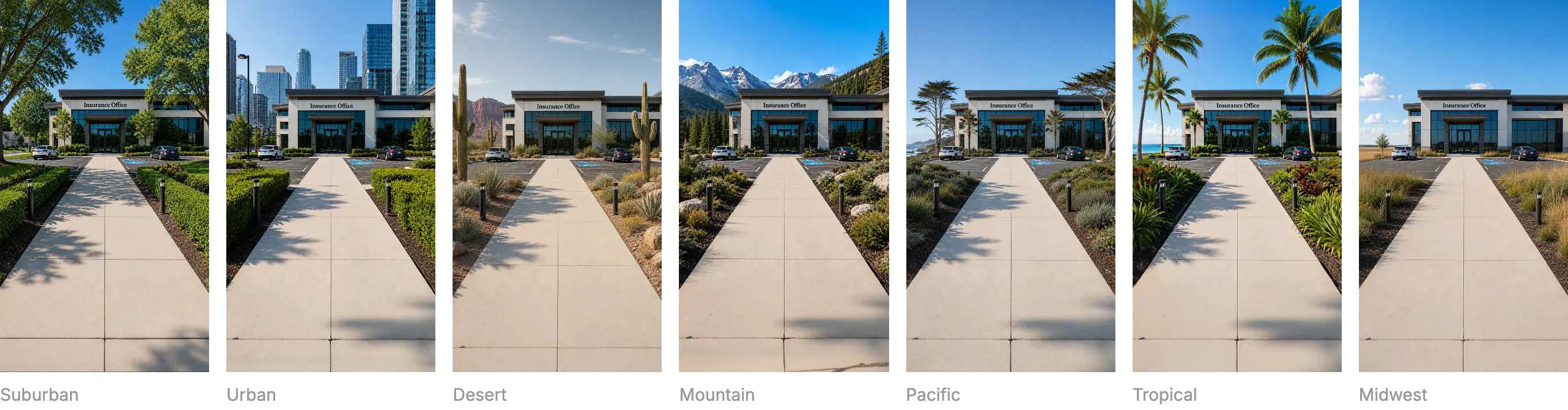
The first thing your answers change is where you are. A ZIP code resolves to one of seven US regions — suburban, urban, desert, mountain, pacific, tropical, midwest — and the same office lands in each of them: cacti and red rock, palm trees and ocean, snow peaks, downtown towers. Each region carries its own skies, so a cloudy day looks cloudy and a break in the clouds gets its own plate.
IT KNOWS WHO YOU ARE
Then it gets personal. Tell it your date of birth and gender, and the shadow stretching down the pavement ahead of you becomes yours — five age bands, both genders.
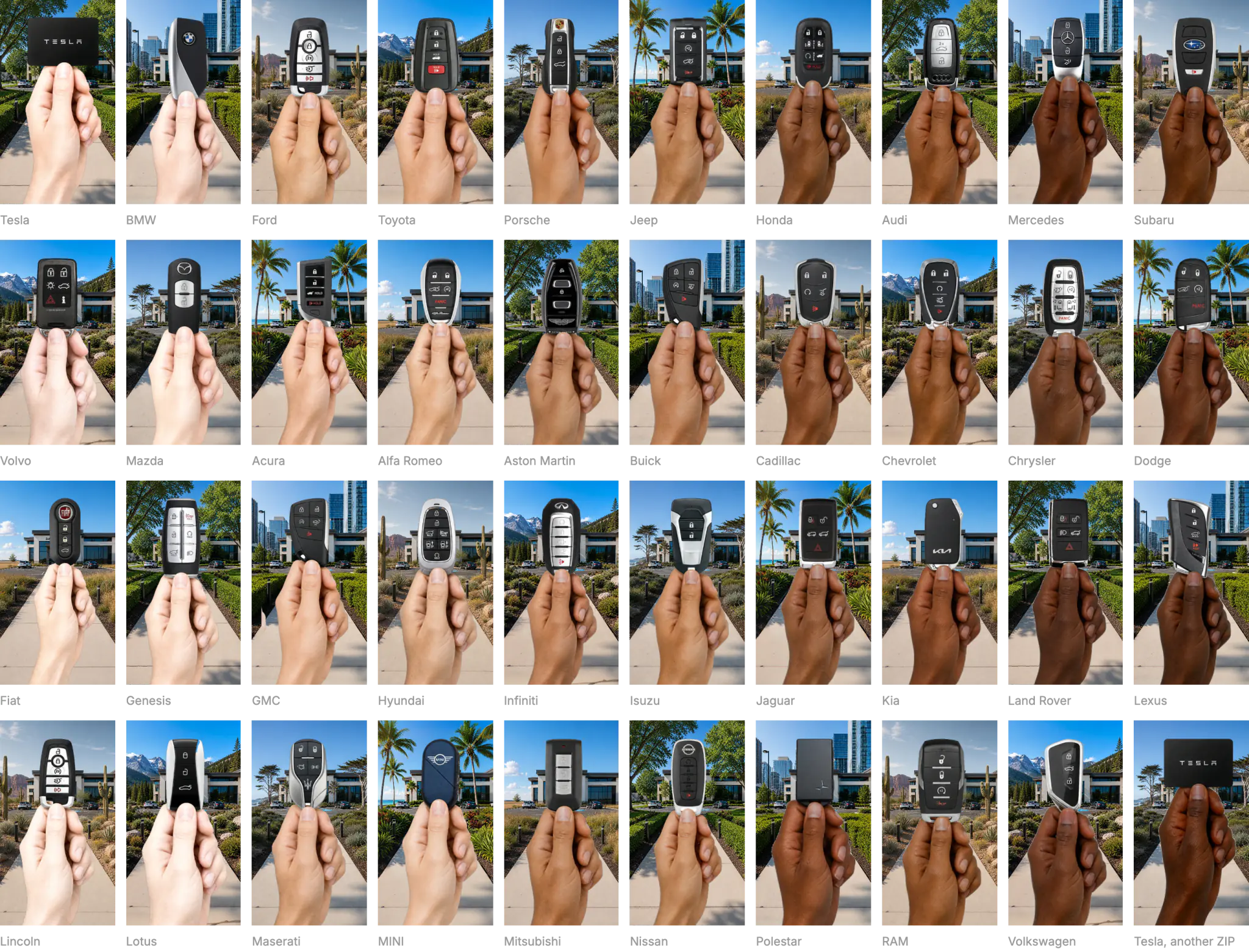
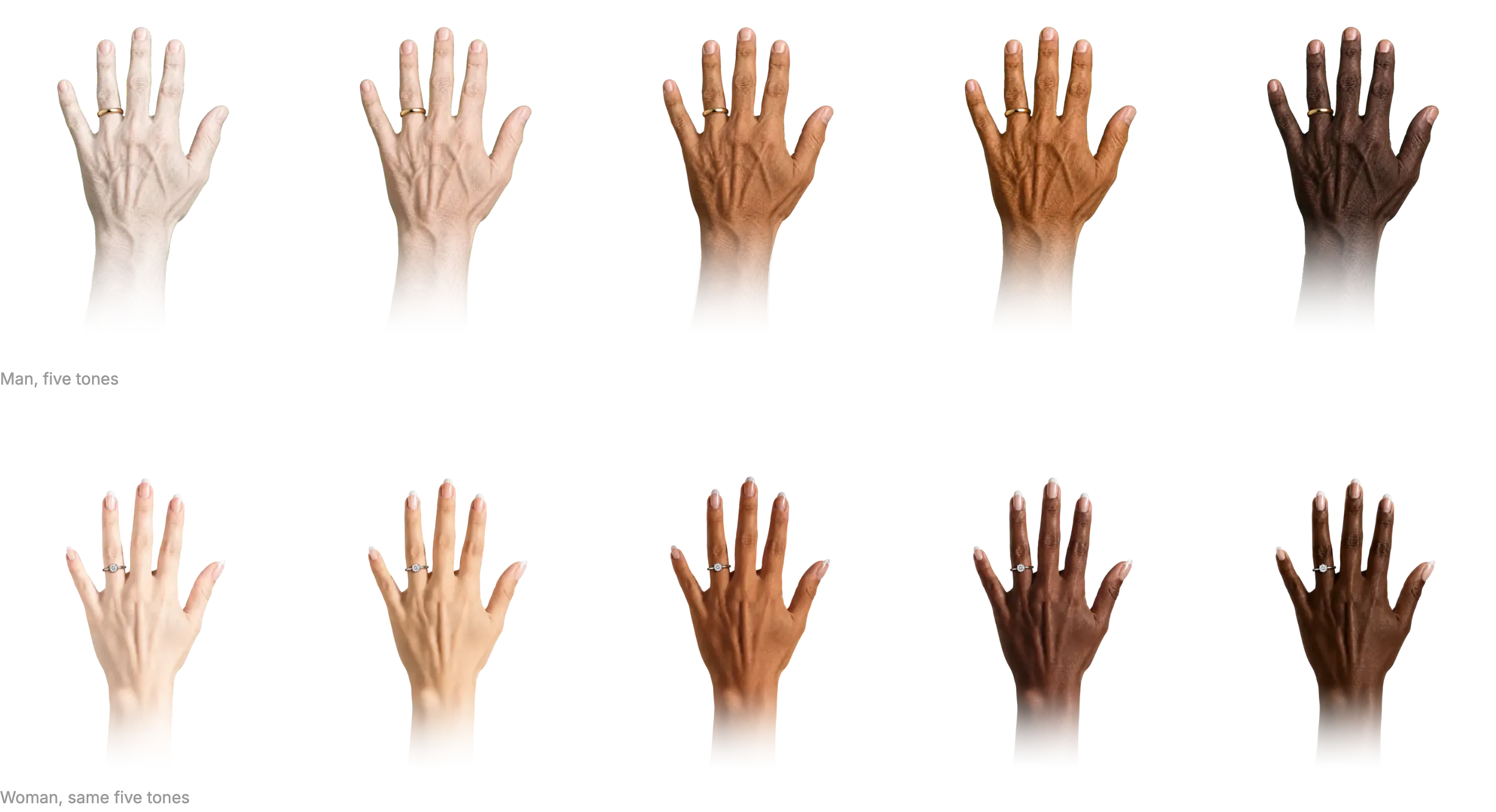
Say you're married and the hand that reaches into frame wears a ring. Pick your skin tone and the hand matches it. Five tones, both genders, ring on or off, a key for every make: 441 hand plates so that one moment feels like yours.
THIRTY-NINE KEYS
The car step is where the idea is easiest to see. Every make in the list has its own fob, generated to match the real thing — the Tesla card, the BMW blade, the Porsche crest — and the hand holding it still carries your skin tone and your ring.
THE SKY IS LISTENING TOO
Risk answers change the weather. Admit an accident and the sky clouds over behind the office; a clean record breaks the clouds again. Nothing announces it — you just notice the afternoon has turned while you were answering.
795 ASSETS, ONE PERSON
No photo shoot, no illustrator, no stock. Every plate is generated, and the pipeline is what made that survivable: one written style anchor — photoreal cinematic, sunny afternoon, premium and calm, never childish, never cyberpunk — prepended to every prompt, then a worklist where each asset has an ID, a target path, the place it appears in code, and its own prompt.
That document is why 795 files look like one film instead of 795 experiments. Hands, shadows, biomes, office plates, interiors, audio: generated, cut, compressed to WebP, and wired into a typed registry the app loads from.
56 MB THAT HAS TO RUN AT 60 FPS
A cinematic world weighs a lot, and it runs on a phone in a browser. So performance is not a review note here — it is a gate with numbers. Every asset category has a budget for its longest pixel edge, its decoded RAM and its weight on disk; the bundle has a first-load budget per route; the runtime has a heap ceiling and an FPS floor.
The budgets ratchet: each one starts at the measured value plus a little headroom, so it passes on day one and only catches regressions — and after an optimisation lands, the budget moves down to lock the win in. It never loosens. Separate runs track memory leaks, decoded image memory at the heaviest moment, and frames per second on a real device.
AND THEN YOU WALK IN
The last stretch is the payoff for answering everything: the last answer opens the doors, the office takes you inside, and the walk ends where it was always going — the options, waiting in the lobby.
WHEN COMPLIANCE REWROTE THE PLAN
Then the constraint arrived that no amount of craft argues with. US lead generation runs on compliance — Jornaya, TrustedForm, consent capture — and that means the form collecting the data has to be the vendor's, inside their iframe, not mine.
The obvious response was to throw the experience away. Instead I inverted it: the vendor's form became the foreground, and everything I had built became the world behind it. I wrote the integration spec myself — what their iframe must expose, which events it must post — so the cinematic reacts to their form's progression: their step fires, my world moves. The experience survived the constraint by changing its job.
WHAT IT PROVES
A freelance client wanted a lead-gen funnel; what they got was a place. Nobody handed me anything to build it with: no design system, no engineers, no art department. Concept, interaction design, art direction, asset production, frontend, performance work and a vendor integration spec — one person, one repo, two weeks to the first shipped build.